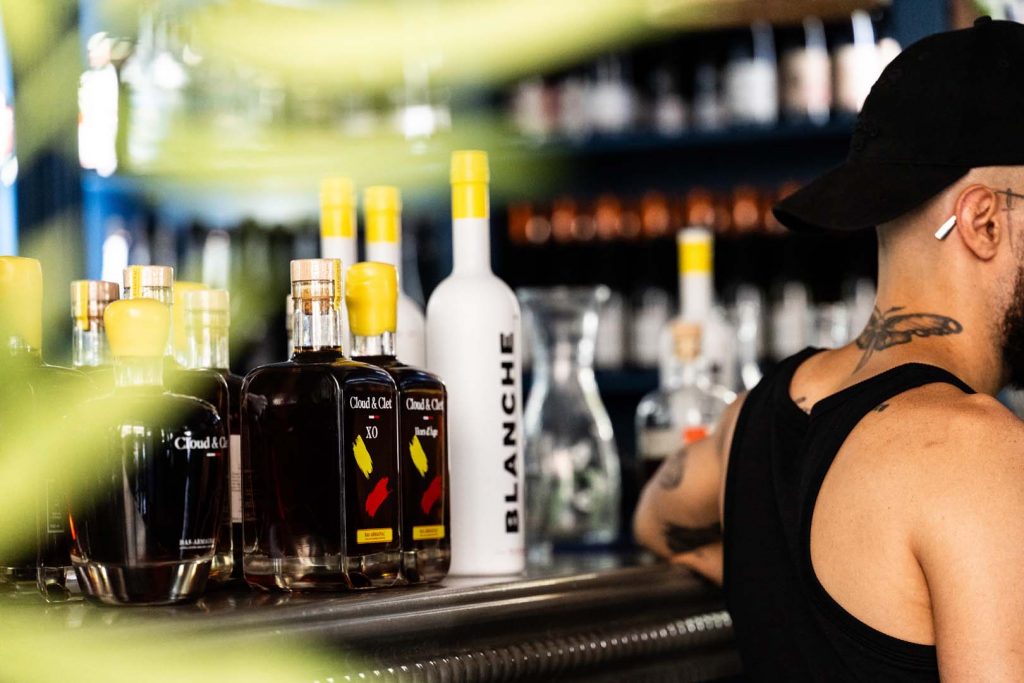
Blanche Armagnac is unaged Armagnac: a brandy distilled from white wine under the Armagnac appellation rules, then rested for at least three months in neutral containers, never in wood. It is crystal clear and keeps the fruit and floral character of the wine it comes from. Officially recognized in 2005, it is served ice-cold, neat or long, and in cocktails.
What is Blanche Armagnac?
Every Armagnac comes off the still as clear as water. Years in oak casks give it its amber color and its notes of vanilla, spice and prune. Blanche skips the barrel. It shows the spirit in its first state, as close as it gets to the grape and the wine.
It isn’t a modern invention. According to the Armagnac trade body, growers long set aside part of their freshly distilled spirit for their own use, mostly at the table. They are the ones who asked for official recognition. If you know unaged American “white whiskey,” the idea is similar: the spirit before wood, except that Blanche starts from wine, not grain.
Is Blanche Armagnac an AOC? The rules in brief
Yes. The “Blanche Armagnac” designation was recognized by French decree on May 27, 2005. Legally, it is the Armagnac AOC (appellation d’origine contrôlée, France’s protected designation of origin) with the added designation “Blanche Armagnac.” You’ll see it called AOC Blanche Armagnac, white Armagnac or, in French, Blanche d’Armagnac. The current rules are set out in the Armagnac AOC specifications approved in March 2025.
- Area: the same as Armagnac, covering parts of the Gers, Landes and Lot-et-Garonne departments in Gascony, southwest France. The grapes are grown, made into wine and distilled inside the appellation, where the spirit also rests.
- Grapes: the ten varieties allowed for Armagnac, led by Ugni Blanc, Baco, Folle Blanche and Colombard.
- Wine: no added sulfites and no chaptalization (added sugar), with a natural strength between 7.5% and 12% ABV, distilled in the months after harvest.
- Distillation: in the traditional Armagnac column still, coming off at 52% to 72.4% ABV, or by double distillation, at 65% to 72.4% ABV.
- Rest: at least three months from distillation in inert containers. No color is allowed.
- Strength: 40% ABV (80 proof) minimum when sold, like all Armagnac.
- Control: every lot ready for sale goes through lab analysis and a tasting. Producers must notify the appellation body of a first release at least one month ahead.
During the rest, the producer aerates the spirit and brings its strength down little by little with water. That slow work rounds out the texture without blurring its precision.
Blanche vs. aged Armagnac: what’s the difference?
Same area, same grapes, same stills. The difference is aging. Aged Armagnac spends at least one year in oak, and it must show measurable color, from pale gold to mahogany. The wood brings tannin, vanilla and spice, then, over time, candied fruit and rancio, the savory, nutty depth of very old brandies.
Blanche rests in neutral vessels and keeps its primary aromas: fresh fruit, flowers, grapes. These aren’t two quality levels. They are two readings of the same spirit. With nothing to mask them, Blanche says a lot about the grape, the wine and the distiller’s work.
Blanche Armagnac vs. vodka, gin, pisco and grappa
All of these spirits are clear. They don’t start from the same raw material, and they aren’t made with the same goal.
| Spirit | Made from | What sets it apart |
|---|---|---|
| Blanche Armagnac | White wine from Armagnac grapes | Distilled to 72.4% ABV at most, so it keeps the wine’s aromas. Rests at least three months in inert containers. |
| Vodka | Agricultural ethyl alcohol (grain, potatoes or other crops) | Distilled or rectified to tone down the taste of the raw materials. Neutrality is the goal. |
| Gin | Flavored agricultural ethyl alcohol | Juniper must be the dominant flavor, often alongside other botanicals. |
| Pisco (Peru) | Freshly fermented grape must | Also an unaged grape spirit, rested at least three months in neutral containers. |
| Grappa | Grape pomace (skins and seeds) | A pomace brandy, distilled from what is left after pressing rather than from wine. |
So Blanche has its own place. It is an appellation wine brandy distilled to a moderate strength, while the neutral alcohol behind vodka and gin is rectified to at least 96% ABV. Behind the bar, it works like a white spirit, but it brings the fruit of the grape.
What does Blanche Armagnac taste like?
A good Blanche is clear and bright. On the nose you’ll find grapes, white fruit, fresh flowers and sometimes a hint of citrus. On the palate it should be clean, with liveliness, fruit and a roundness that comes from the rest and the gradual reduction. The official specifications describe “intense and fine” aromas of fresh fruit or flowers.
Without oak, the grape variety carries a lot of weight. Folle Blanche is known for floral finesse, Baco for roundness, Ugni Blanc for freshness. Each producer works with its own vineyard and still.
How is Blanche Armagnac served?
- Ice-cold: the most traditional way. The bottle is kept in the fridge, or even the freezer, and the Blanche is poured into a small, well-chilled glass. Cold gives it a denser texture and highlights its freshness.
- Neat at room temperature: in a tulip glass, to explore all its aromas, the way you would taste a wine.
- Long: over ice with tonic or sparkling water, in a highball glass.
- In cocktails: as a fruity, floral base (see below).
In Gascony, ice-cold Blanche is also the spirit of the “trou gascon,” a small glass served midway through a long meal, sometimes poured over prune ice cream. For more ideas at the table, see our Armagnac food pairing guide.
Blanche Armagnac in cocktails
For bartenders, Blanche is an expressive base: more aromatic than a neutral spirit, with none of the tannin of oak. It mixes like gin or vodka, with the fruit of the grape on top. Our recipes include:
- Blanche & Tonic: Blanche, tonic and a citrus wedge in a highball over ice. Gascony’s take on the gin and tonic.
- Basilique Smash: fresh basil, lemon juice, blood orange syrup and crème de pêche, served over crushed ice.
- Blanche Passion: mango, passion fruit, lime, vanilla syrup and two dashes of Angostura bitters.
- Palomaniac: grapefruit juice, lime and a pinch of fleur de sel, built right in the glass. You’ll find it with all our recipes on the cocktails page.
The common thread: leave room for the fruit of the Blanche, with citrus, herbs or tropical fruit rather than ingredients that would bury it.
Cloud & Clet Blanche
Our Blanche comes from the Domaine de M., a family estate in Mauléon-d’Armagnac, in the heart of the Grand Bas-Armagnac, on tawny sand soils known locally as sables fauves. The estate handles every step from vine to bottle and distills on site in its own Armagnac column still.
It is perfectly clear and bright, with crystalline highlights. The nose is intense and expressive: white fruit (pear, grape), fresh flowers and a light touch of lemon. The palate opens supple and nicely round; it is fruity and lively, with a clean, pure finish. Bottled at 40% ABV, it is enjoyed ice-cold, neat or long, and in cocktails.
Frequently asked questions
Is Blanche Armagnac really Armagnac?
Yes. It falls under the Armagnac AOC, with the added designation “Blanche Armagnac.” Only the aging differs: a rest in inert containers instead of oak casks.
When was Blanche Armagnac recognized?
By decree on May 27, 2005. Its rules are now part of the Armagnac AOC specifications approved in 2025.
Why is Blanche Armagnac clear?
Because it never touches wood. It rests at least three months in inert containers and must show no color at all.
How is it different from vodka?
Vodka starts from alcohol rectified to be as neutral as possible. Blanche is a wine brandy distilled to a moderate strength, so it keeps the aromas of the grape.
What temperature is Blanche served at?
Ice-cold for freshness, or at room temperature in a tulip glass to appreciate its full aromatic range.
Blanche is the most direct way into Armagnac: the fruit of the wine and the signature of the still, without the filter of oak. Tasting notes and serving ideas are on the Cloud & Clet Blanche page.

