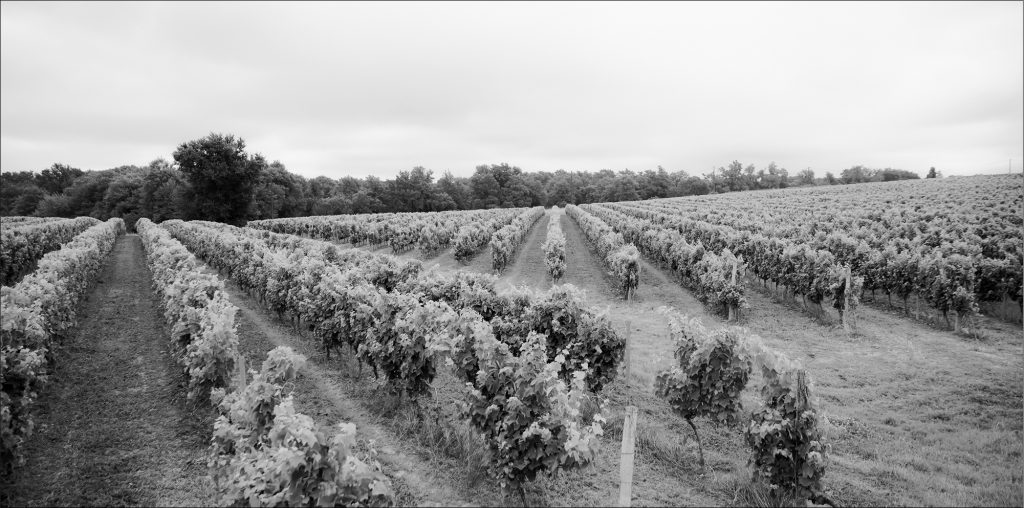
The Armagnac appellation covers three regions, first mapped in 1909, that run from west to east: Bas-Armagnac, Armagnac-Ténarèze and Haut-Armagnac. From the tawny sands of the west to the clay and limestone of the east, each gives brandies of a different character. Bas-Armagnac, the largest, is also the most renowned.
Where is Armagnac made?
Armagnac comes from Gascony, in southwest France, between the Garonne River to the north, the Atlantic Ocean to the west and the Pyrenees to the south. The production area spans three French départements, or administrative counties: Gers, which holds most of it with 245 towns and villages, Landes (29) and Lot-et-Garonne (18).
A decree of May 25, 1909 drew the boundaries of the production zone and its three subregions, and Armagnac became an AOC (protected designation of origin) in 1936. Today’s official rules call them “complementary geographical names”: Bas Armagnac, Armagnac Ténarèze and Haut Armagnac. For the basics of the spirit itself, see our guide to Armagnac.
Two gradients, west to east
- Climate: strongly oceanic in the west, with steady rain and no real summer drought; more continental in the east, where summers stay dry until late-season storms.
- Soils: tawny sands of marine origin dominate the west; toward the east they give way to molasse, a clay formation crossed by beds of hard limestone. The center mixes both.
The soils’ ability to hold water also rises from west to east. So vines get a steady supply everywhere: from rain in the west, from clay in the east.
| Region | Départements | Landmark towns | Main soils | Brandy style |
|---|---|---|---|---|
| Bas-Armagnac | Western Gers, eastern Landes | Eauze, Nogaro, Cazaubon, Labastide-d’Armagnac | Tawny sands, boulbènes | Fine, fruity, delicate |
| Armagnac-Ténarèze | Central Gers, southern Lot-et-Garonne | Condom, Montréal, Vic-Fezensac, Nérac | Boulbènes, clay-limestone terreforts | Fuller-bodied, at their best after long aging |
| Haut-Armagnac | Eastern and southern Gers | Auch, Lectoure, Fleurance, Marciac | Limestone and clay-limestone, boulbènes in valleys | Rare, little seen |
Bas-Armagnac: the tawny sands of the west
Where: the western end of the appellation, straddling western Gers and eastern Landes. Landmark towns include Eauze, often called the capital of Armagnac, plus Nogaro, Cazaubon and Manciet in Gers, and Labastide-d’Armagnac and Gabarret in Landes. “Bas” means “lower,” and it refers to the terrain, which is lower in the west, not to quality.
Soils: the sables fauves, or tawny sands, a marine deposit partly covered by silt, mixing clay and silica and colored by iron oxides. They carry boulbènes, poor, acidic soils ranging from silt to sandy silt. The land rolls in gentle hills, sheltered by the Landes pine forest and dotted with oak woods. Its traditional nickname, “Black Armagnac,” is usually linked to this dark, wooded landscape.
Style: fine, fruity, delicate brandies with a strong reputation, and old vintages that have made the region’s name. It is also the home ground of the Baco grape, which is very well suited to sandy soils.
Share: Bas-Armagnac accounts for about two-thirds of the vineyard area registered for Armagnac (French Ministry of Culture), and 77% of the area distilled in 2024 according to the Armagnac trade body.
Armagnac-Ténarèze: the transition zone
Where: the center of the appellation, around Condom in Gers, reaching into southern Lot-et-Garonne. Landmark towns include Condom, Montréal, Fourcès, Valence-sur-Baïse and Vic-Fezensac in Gers, and Nérac and Mézin in Lot-et-Garonne. The name refers to the Ténarèze, an old ridge road that follows the watershed between the Garonne and Adour river basins.
Soils: this is where sands meet molasse. You find both boulbènes and terreforts, heavy but fertile clay-limestone soils.
Style: generally fuller-bodied, more structured brandies that need time and reach their peak after long aging.
Share: a little under one-third of the registered area.
Haut-Armagnac: the limestone arc of the east and south
Where: entirely in Gers, forming a wide arc to the east and south of the other two regions. Landmark towns include Auch, Lectoure, Fleurance, Marciac and Plaisance.
Soils: limestone or clay-limestone hills, with boulbènes in some valleys. The official rules describe deep clay terreforts in the east, along with peyrusquets, shallow, stony, chalky soils. The pale color of these soils is usually given as the reason for its nickname, “White Armagnac.”
Style: vines here are few and scattered; most were planted in the 19th century, when demand was high. Bottlings labeled Haut-Armagnac are therefore rare, and their style is less clearly defined than that of the other two regions.
Share: a marginal slice, around 1% of the registered area.
“Grand Bas-Armagnac”: official name or tradition?
It is a traditional term, not an official designation. The AOC rules recognize only three complementary geographical names: Bas Armagnac, Armagnac Ténarèze and Haut Armagnac. “Grand Bas-Armagnac” has no legal boundaries.
The phrase dates back to the late 19th century, when descriptions of the region singled out, within Bas-Armagnac, a “Grand Bas-Armagnac” in the west, straddling Landes and Gers around Labastide-d’Armagnac. Some producers in the area still use it, sometimes on old vintages, to place their brandies at the heart of the tawny sands. Grand-Bas-Armagnac is also the name of a present-day canton, an administrative district of Gers centered on Nogaro, which has no bearing on the appellation.
Mauléon-d’Armagnac and the Cloud & Clet estate
Mauléon-d’Armagnac is a village in Gers on the border with Landes, next to Labastide-d’Armagnac. It is one of the Bas-Armagnac communes listed in the appellation rules, and it lies in the heart of the Grand Bas-Armagnac.
This is where Cloud & Clet was born, on our family estate: 120 hectares (about 300 acres) of vines, woods, heathland and meadows on iron-rich, clay-and-silica tawny sands. We grow Baco, Ugni Blanc, Colombard and Folle Blanche, and handle every step: winemaking, distillation on site in our own Armagnac column still, aging in oak casks in semi-underground cellars, blending and bottling. Learn more about the estate and our craft.
How to read a region on an Armagnac label
To carry the name Bas-Armagnac, Armagnac-Ténarèze or Haut-Armagnac, a brandy must come from grapes harvested in that zone’s communes, then be made into wine, distilled and aged within the appellation area. A brandy blended from grapes of several zones is labeled simply Armagnac. A regional name is therefore not a quality tier but a more precise statement of origin.
Frequently asked questions
What is the difference between Armagnac and Bas-Armagnac?
Armagnac is the appellation. Bas-Armagnac is a complementary geographical name: it guarantees that all the grapes come from the Bas-Armagnac zone.
Which Armagnac region is the best?
Bas-Armagnac has the strongest reputation, especially for old vintages. But each region has its own style, finesse and fruit in the west, structure in Ténarèze, and the grape, the producer’s skill and the length of aging matter just as much.
Is Grand Bas-Armagnac an appellation?
No. It is a traditional term for the western part of Bas-Armagnac, around Labastide-d’Armagnac. Only three complementary names are official.
How do you pronounce Ténarèze?
Roughly “tay-nah-REZZ.” Armagnac itself is pronounced “ar-man-YAK.”
Three regions, three characters: knowing the map helps you read a label and choose a bottle. Our 100% Baco vintages, born on the tawny sands of Bas-Armagnac, show that terroir harvest after harvest.

